Tesla Buying Guide 2026: Everything You Need to Know Before Buying
Buying a Tesla is exciting, but it is also a decision you should make with your head as much as your heart. You may be attracted to the instant acceleration, minimalist interior, quiet ride, and electric driving experience. But before you place an order, you need to know whether the Tesla you want actually fits your daily life.
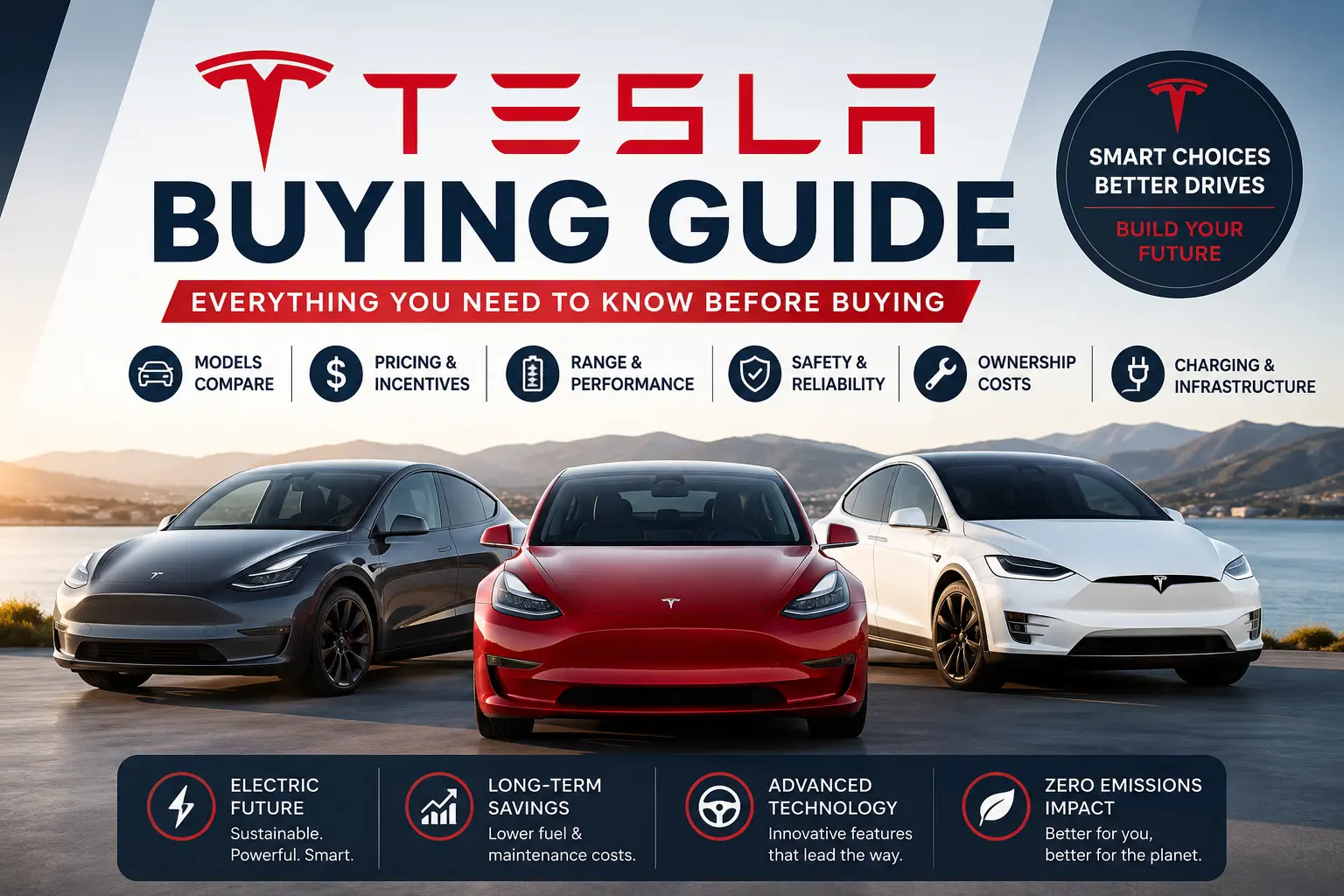
This Tesla Buying Guide walks you through the important questions: which model to choose, how much range you need, charging, battery warranties, insurance, maintenance, new versus used cars, and the costs that can easily be overlooked.
Tesla Buying Guide: Which Model Should You Buy?
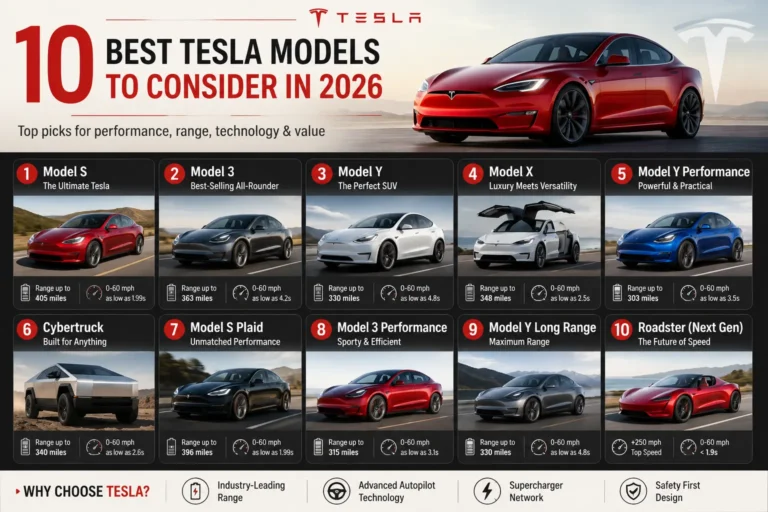
Tesla’s current lineup includes the Model 3, Model Y, Cybertruck, Model S, and Model X, although availability and configurations can vary by market. Tesla’s official comparison tool currently focuses on Model 3, Model Y, and Cybertruck. (Tesla)
| Tesla model | Best suited for | Main strength |
|---|---|---|
| Model 3 | Commuters | Efficiency and sedan driving |
| Model Y | Families | Space and versatility |
| Model S | Premium buyers | Luxury and performance |
| Model X | Large families | SUV practicality |
| Cybertruck | Truck buyers | Towing and utility |
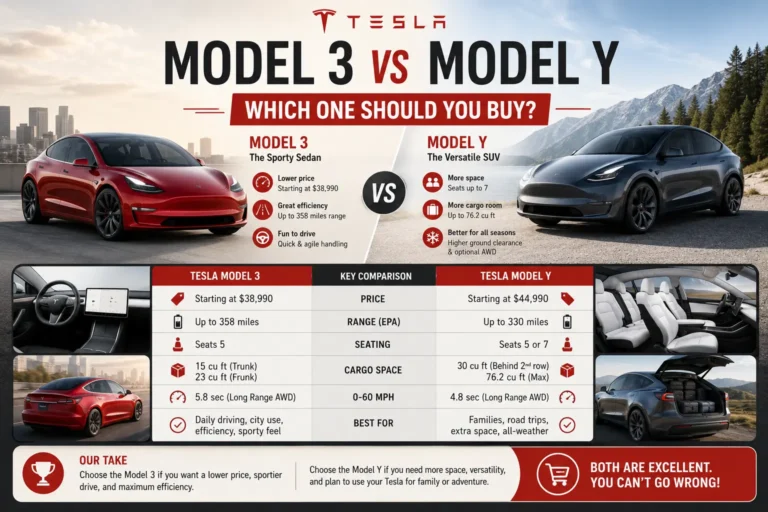
Tesla Model 3
The Model 3 is a strong choice if your priority is efficient daily driving. Its sedan shape makes it particularly appealing if you spend most of your time commuting or driving around town.
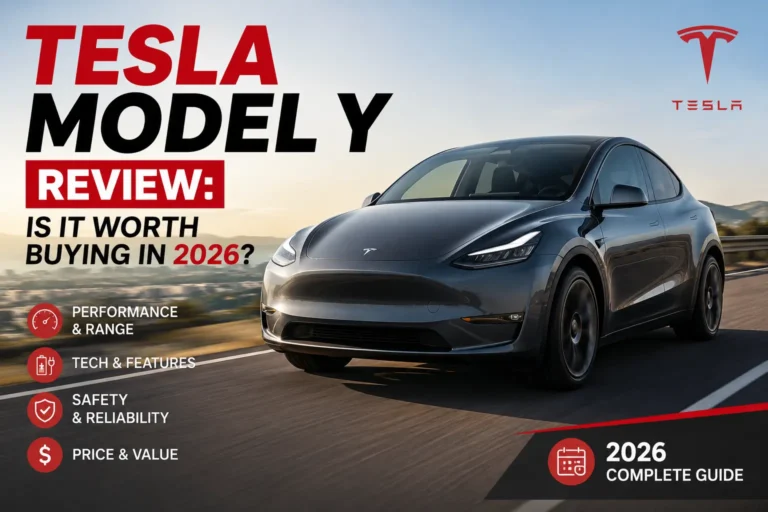
Tesla Model Y
If you regularly carry children, luggage, pets, groceries, or sports equipment, the Model Y deserves serious consideration. Tesla describes it as a midsize SUV designed for road trips and extra cargo space. (Tesla)
Tesla Model S, Model X and Cybertruck
If you want something more specialized, the Model S and Model X occupy Tesla’s premium sedan and SUV categories, while the Cybertruck targets buyers who need pickup-style utility.
The Cybertruck currently offers up to 11,000 pounds of listed towing capacity and up to 120.7 cubic feet of cargo volume in its specified configuration. (Tesla)
Tesla Buying Guide: How Much Should You Spend?
Your Tesla budget should go beyond the vehicle’s advertised price.
Before buying, calculate:
- Vehicle price
- Taxes and registration
- Financing interest
- Insurance
- Home charging equipment
- Electricity
- Tires
- Maintenance
- Optional features
- Potential incentives
Don’t Focus Only on the Monthly Payment
A low monthly payment can look attractive while hiding a longer loan term and higher total interest.
Instead, compare the total amount you will pay over the entire financing period.
You should also obtain an insurance quote before ordering. Insurance costs can vary significantly according to your location, driving history, vehicle configuration, and insurer.
Tesla Buying Guide: How Much Range Do You Really Need?
Range is important, but you don’t necessarily need the Tesla with the biggest battery.
Think about your normal week.
If you drive 40 miles each day and can charge at home overnight, your requirements will be very different from someone who regularly drives 250 miles between charging opportunities.
What Can Reduce Real-World Range?
Your actual range can change because of:
- Highway speeds
- Cold or hot weather
- Wind
- Hills
- Heavy cargo
- Tire and wheel configuration
- Heating or air conditioning
- Driving style
You should therefore treat official range figures as a useful comparison tool rather than a guarantee of what you will see every day.
EPA vs. WLTP
If you are comparing Teslas internationally, pay attention to the testing standard.
EPA and WLTP figures are produced using different procedures, so you should never compare the numbers as though they were identical measurements.
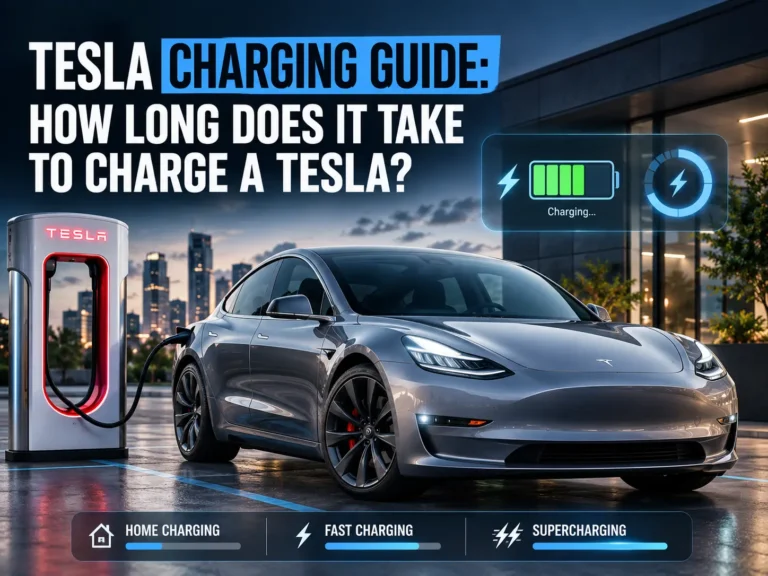
Tesla Charging Guide: Where Will You Charge?
Before you buy an electric vehicle, answer one simple question:
Where will you charge it?
Home Charging
Home charging can make Tesla ownership particularly convenient. Instead of visiting a fuel station, you can plug in when you arrive home and start the next day with energy added to the battery.
Consider:
- Whether you have private parking
- Electrical capacity
- Charger installation
- Local electricity prices
- Your daily mileage
Supercharging and Public Charging
For longer journeys, Tesla’s Supercharger network can be an important part of your ownership experience.
You should check the charging network around your home, workplace, and frequently visited destinations before buying.
If you travel internationally, also check whether third-party networks and required charging adapters are compatible with your particular Tesla.
Tesla Battery: What You Need to Know Before Buying
The battery is one of the most important components in your Tesla, so warranty coverage deserves attention.
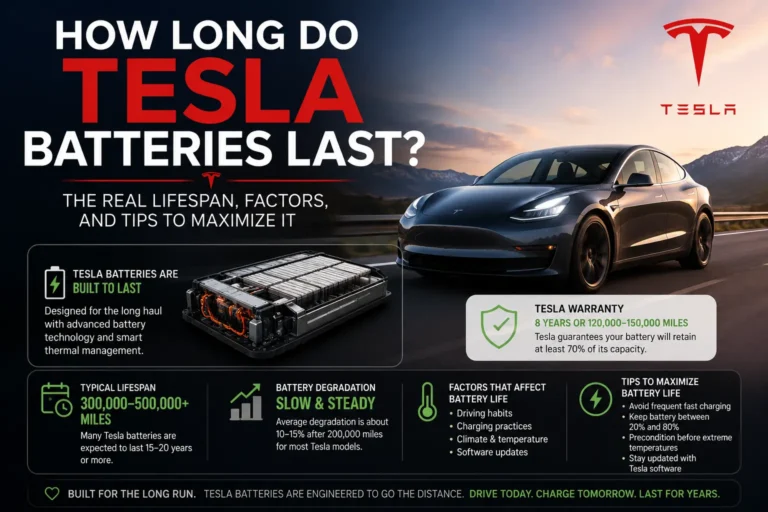
Tesla’s current U.S. warranty documentation provides different battery and drive-unit coverage depending on model and configuration. For example, current Model 3 and Model Y configurations receive battery and drive-unit coverage for up to 8 years, with mileage limits ranging from 100,000 to 120,000 miles, and a minimum 70% battery-capacity retention provision under the applicable warranty. (Tesla)
Your exact coverage depends on the vehicle you purchase and your market.
What About Battery Degradation?
Like other lithium-ion batteries, Tesla batteries gradually lose some energy capacity with time and use. Tesla explicitly notes that gradual battery-energy or power loss is not generally covered by the battery warranty except where the warranty specifies otherwise. (Cloudinary)
For a used Tesla, ask about:
- Battery condition
- Remaining battery warranty
- Mileage
- Charging history
- Vehicle history
New vs. Used Tesla: Which Should You Buy?
A new Tesla gives you the latest configuration, fresh warranty coverage, and fewer unknowns.
A used Tesla, however, can offer access to a higher-spec model at a lower purchase price.
Choose New If You Want:
- Latest available configuration
- Full new-vehicle warranty
- More configuration choices
- No previous owner
- Latest hardware and interior changes
Choose Used If You Want:
- Lower purchase price
- Access to older premium models
- Potentially lower depreciation
- More vehicle for your budget
If you’re considering a used Tesla, don’t look only at the odometer. Examine the battery warranty, accident history, tires, wheels, interior condition, charging equipment, and service records.
Tesla Maintenance and Ownership Costs
One advantage of switching from gasoline to electric is that you eliminate many traditional engine-related maintenance tasks.
You don’t need conventional:
- Oil changes
- Spark-plug replacements
- Engine tune-ups
- Exhaust-system maintenance
But your Tesla still needs attention.
Common Ownership Expenses
- Tires
- Wheel alignment
- Brake inspections
- Wiper blades
- Cabin air filters
- Suspension components
- General repairs
Tesla also states that non-warranty maintenance or repairs can be performed at Tesla Service or a preferred non-Tesla service center, although Tesla is not responsible for problems caused by improper third-party repair or maintenance. (Tesla)
Don’t forget tires when calculating your budget. Performance models and larger wheels can make replacement tires more expensive.
Tesla Warranty: What Does Your Car Include?
Tesla’s warranty structure includes separate coverage for the vehicle, restraint system, battery and drive unit, and certain body-related issues. (Tesla)
For example, Tesla’s U.S. documentation currently lists a 4-year/50,000-mile Basic Vehicle Limited Warranty. Battery and drive-unit coverage varies according to model and configuration. (Tesla)
Your local Tesla warranty can differ, so always read the warranty supplied for your specific vehicle and market.
For eligible Model 3 and Model Y vehicles, Tesla also offers a High Voltage Battery and Drive Unit Extended Service Agreement under certain conditions. (Tesla)
Tesla Safety and Driver-Assistance Technology
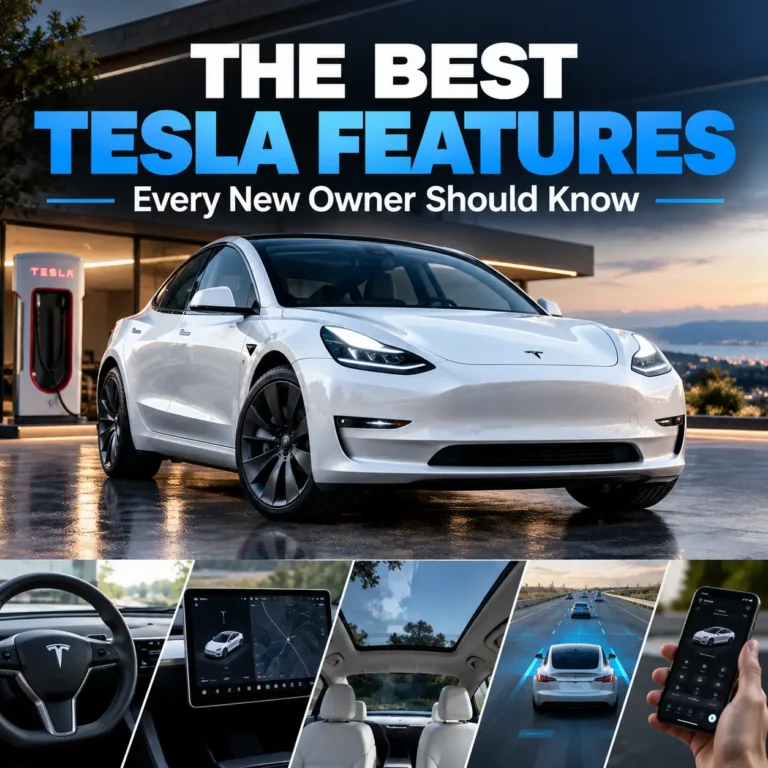
Tesla vehicles include a range of active safety and driver-assistance technologies.
When evaluating your Tesla, distinguish between:
- Standard safety equipment
- Autopilot features
- Full Self-Driving (Supervised)
The last one is particularly important.
Full Self-Driving (Supervised) should not be treated as an autonomous-driving system. Tesla describes it as an advanced driver-assistance system that requires active driver supervision. The Cybertruck page, for example, explicitly describes the system as operating under your active supervision. (Tesla)
You should therefore evaluate these features as driver assistance rather than a replacement for your attention.
Tesla Buying Guide: Your Test-Drive Checklist
Don’t let a short test drive become a formality.
Use it to test the things that affect your everyday life.
Check:
- Driving position
- Seat comfort
- Visibility
- Steering
- Braking
- Ride quality
- Cabin noise
- Rear-seat space
- Screen controls
- Parking
- Cargo capacity
If you’re buying a family Tesla, bring the equipment you actually use.
Bring the stroller.
Bring the child seat.
Bring your luggage.
If you have a dog, consider how your pet will fit into the cargo area.
A five-minute measurement can tell you more about practicality than dozens of online reviews.
Tesla Buying Guide: Mistakes You Should Avoid
Buying More Range Than You Need
Extra range can be useful, but don’t automatically pay more for it if you rarely need it.
Forgetting Home Charging
Your charging situation can dramatically influence how convenient your Tesla feels.
Ignoring Insurance
Get insurance estimates before committing to a specific trim.
Choosing the Wrong Body Style
A Model 3 may be perfect for you now, but if you’re regularly carrying large loads, a Model Y could make more sense.
Paying for Features You Won’t Use
Before purchasing an optional software or performance feature, ask yourself how often it will actually benefit your driving.
Tesla Buying Guide: Which Tesla Is Right for You?
| Your priority | Tesla to consider |
|---|---|
| Daily commuting | Model 3 |
| Family practicality | Model Y |
| Premium sedan | Model S |
| Premium SUV | Model X |
| Pickup utility | Cybertruck |
| Maximum cargo flexibility | Model Y/Cybertruck |
| Sporty sedan experience | Model 3 |
The important word is consider. Your local market may have different models, configurations, prices, and availability.
Frequently Asked Questions About This Tesla Buying Guide
What should you know before buying a Tesla?
You should understand the model differences, purchase price, charging options, range, insurance, battery warranty, maintenance, incentives, and your long-term ownership costs.
Is a Tesla worth buying in 2026?
It can be, particularly if you have convenient charging and your chosen Tesla fits your driving needs. Compare the complete ownership cost rather than focusing only on the purchase price.
Which Tesla should you buy?
For efficient everyday driving, the Model 3 is worth considering. For family and cargo flexibility, the Model Y is generally the more practical option.
How much does it cost to charge a Tesla?
A simple estimate is:
Charging cost = electricity used × your electricity rate
Your actual cost depends on where you charge, your local electricity price, charging losses, and your vehicle’s efficiency.
How long does a Tesla battery last?
Battery life varies according to mileage, climate, usage, chemistry, and charging behavior. Tesla’s current battery and drive-unit warranties extend up to eight years on applicable vehicles, with different mileage limits and a 70% capacity-retention provision depending on configuration. (Tesla)
Does a Tesla need maintenance?
Yes, although you avoid many traditional gasoline-engine services. You still need to budget for tires, inspections, filters, wipers, alignment, and repairs.
Conclusion: Make Your Tesla Purchase With Confidence
The smartest way to buy a Tesla isn’t to chase the newest feature or the biggest range number. It’s to choose the vehicle that fits your budget, your commute, your charging setup, and your lifestyle.
Start by comparing the available models. Then calculate your realistic ownership costs, check charging options, obtain insurance quotes, research local incentives, review warranty coverage, and test-drive the vehicle you are considering.
Most importantly, don’t let excitement push you into a configuration you don’t actually need.
Ready to buy your Tesla? Compare your preferred models, calculate the real five-year cost, and take a test drive before placing your order. Then share your choice—Model 3, Model Y, Model S, Model X, or Cybertruck—and tell us what matters most to you.