Sparkle Your Counters: The Easy Homemade Granite Cleaner You Need
Granite countertops are a stunning addition to any home, offering beauty and durability. However, keeping them sparkling clean without damaging their delicate surface can feel like a challenge. Many commercial products are expensive, full of harsh chemicals, or simply not safe for granite. If you’re looking for an effective, budget-friendly, and safe way to maintain your beautiful surfaces, you’ve come to the right place. This guide will walk you through creating your own easy homemade granite cleaner, ensuring your counters shine without compromise.
Why Choose a Homemade Granite Cleaner?
Opting for a DIY granite cleaner offers several compelling advantages:
- Cost-Effective: You’ll save money by using ingredients you likely already have or can buy cheaply.
- Safe & Natural: You control the ingredients, avoiding harsh chemicals, strong acids, or abrasive compounds that can etch or dull granite over time. This is especially important for homes with children or pets.
- Eco-Friendly: Reduce plastic waste from commercial cleaner bottles and minimize your environmental footprint.
- Gentle Yet Effective: Our recommended recipe cleans thoroughly, removes grime, and leaves a streak-free shine without damaging your stone’s sealant.
- Peace of Mind: Knowing exactly what goes onto your food prep surfaces gives you confidence in your home cleaning routine.
Understanding Granite: What Makes It Special (and Sensitive)
Before diving into cleaning, it’s helpful to understand granite itself. Granite is a natural stone, formed under immense heat and pressure. While incredibly hard, it’s also porous. This porosity means it can absorb liquids, leading to stains if not properly sealed. Most granite countertops are sealed upon installation and should be re-sealed periodically (typically every 1-3 years, depending on use and sealant type).
Because of its porous nature and sealant, certain substances are definite no-gos:
- Acids: Vinegar, lemon juice, ammonia, and many common bathroom cleaners can etch the sealant and dull the stone.
- Abrasives: Steel wool, scouring pads, or abrasive powders can scratch the surface or wear down the sealant.
- Harsh Chemicals: Bleach and strong degreasers can strip the sealant, leaving your granite vulnerable to stains.
- Standing Water: Allowing water to sit for extended periods can penetrate the sealant and leave water spots or even etch the stone.
Understanding these sensitivities is key to effective and safe household maintenance for your granite.
Your Go-To Easy Homemade Granite Cleaner Recipe
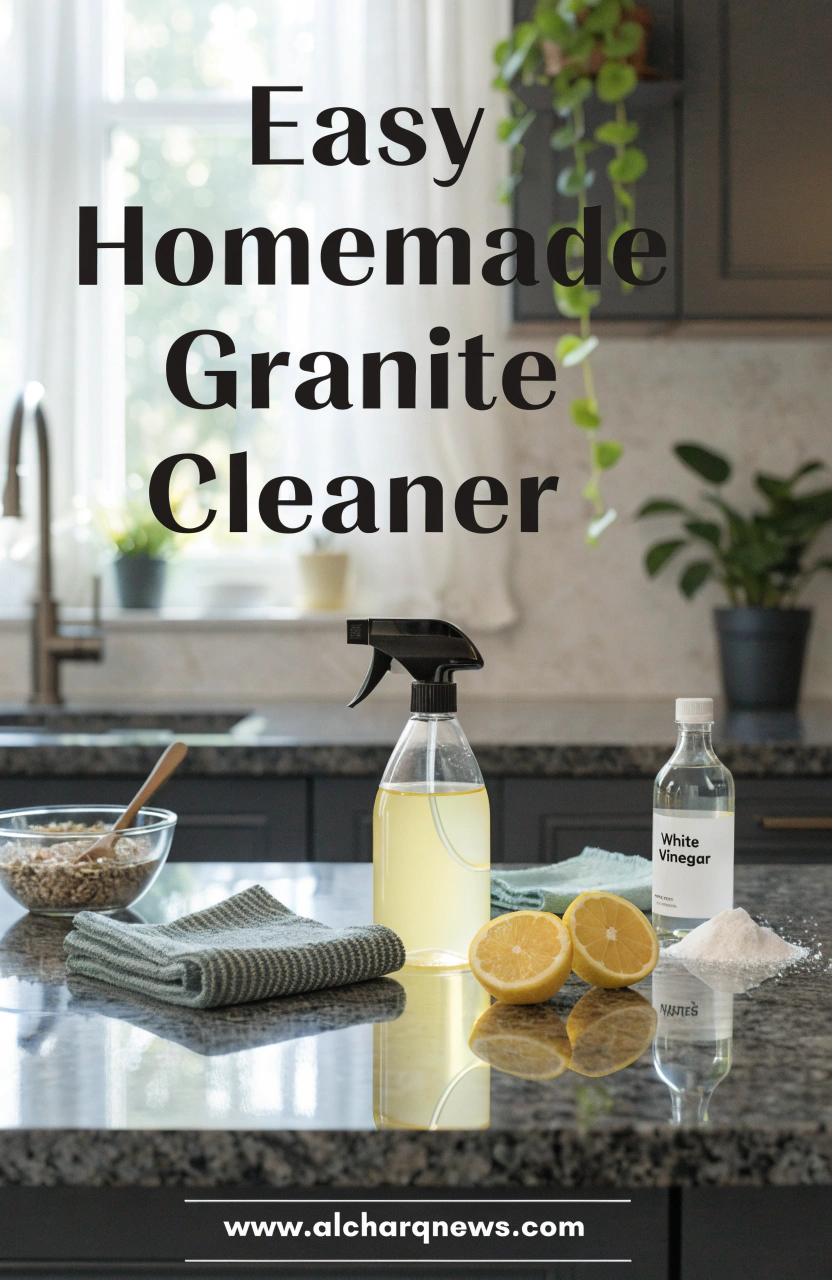
This simple recipe uses gentle ingredients that clean effectively without harming your granite. It’s perfect for daily wiping and light cleaning as part of your regular home cleaning schedule.
Ingredients You’ll Need:
- 1/4 cup rubbing alcohol (70% isopropyl alcohol works best)
- 3 drops mild dish soap (like Dawn or any gentle, pH-neutral brand)
- 1 3/4 cups distilled water (tap water can leave mineral deposits and streaks)
- Optional: 5-10 drops essential oil for scent (e.g., lavender, lemon, tea tree – ensure it’s a pure oil and sparingly used)
- A clean, empty spray bottle (glass is preferred for essential oils, but plastic is fine)
- Two clean microfiber cloths
Step-by-Step Mixing & Application:
- Combine Ingredients: Pour the rubbing alcohol and mild dish soap into your spray bottle.
- Add Water: Carefully add the distilled water. If using essential oils, add them now.
- Shake Gently: Put the lid on the spray bottle and gently shake to combine the ingredients. Avoid vigorous shaking, which can create too many suds from the dish soap.
- Spray Your Surface: Lightly mist your granite countertop with the cleaner. You don’t need to saturate it.
- Wipe Clean: Using one clean microfiber cloth, wipe down the surface immediately. Work in small sections if you have a large area.
- Buff Dry: With your second clean, dry microfiber cloth, buff the granite until it’s completely dry and streak-free. This is a crucial step for a brilliant shine.
This quick process makes daily kitchen clean-up a breeze and integrates seamlessly into your overall home organization efforts.
Beyond the Basics: Advanced Homemade Granite Cleaner Tips
Daily Wipes & Quick Clean-ups
For everyday spills and crumbs, a quick wipe with warm water and a microfiber cloth is often sufficient. For a slightly deeper clean, or to remove stickiness, use your homemade granite cleaner. Make it a habit to wipe down counters after meals. This simple act of decluttering and cleaning prevents grime build-up and keeps your kitchen looking pristine.
Deep Cleaning & Stain Removal
Even with regular cleaning, stains can sometimes appear. Here’s how to tackle them:
- Oil-Based Stains (grease, cooking oil, milk, cosmetics): These darken the granite. Create a poultice by mixing baking soda with a small amount of hydrogen peroxide to form a thick paste. Apply the paste generously over the stain, cover with plastic wrap, and tape the edges. Let it sit for 12-24 hours. The poultice will draw out the stain. Scrape off the dried paste, rinse with water, and dry. You might need to repeat this process.
- Water Spots/Mineral Deposits: These often look like dull, white rings. Your homemade cleaner with rubbing alcohol can help. For stubborn spots, a paste of baking soda and a tiny bit of water can be gently rubbed on with a soft cloth, then rinsed and dried thoroughly.
- Food Stains (coffee, tea, juice): For light stains, a diluted solution of hydrogen peroxide (around 3%) can be applied directly to the stain with a paper towel, covered, and left for a few hours. Rinse well.
Always test any stain removal method in an inconspicuous area first.
Polishing for Extra Shine
While your homemade cleaner leaves a great shine, if you want an extra gleam, consider a granite polish designed specifically for natural stone. Alternatively, after cleaning, a tiny amount of mineral oil (food grade) can be applied with a soft cloth and buffed thoroughly for a subtle sheen, but be careful not to use too much as it can attract dust.
Common Mistakes to Avoid When Cleaning Granite
Even with the best intentions, it’s easy to make mistakes that can harm your granite. Avoid these common pitfalls:
- Using Acidic Cleaners: As mentioned, vinegar, lemon juice, and harsh bathroom cleaners are a big no. They will etch the sealant and dull your stone.
- Abrasive Scrubbers: Never use steel wool, rough sponges, or abrasive powders. Stick to soft microfiber cloths.
- Leaving Spills to Sit: Wipe up spills immediately, especially acidic liquids like wine, coffee, or fruit juice, which can stain or etch quickly.
- Allowing Water to Stand: Don’t leave wet dishes, glasses, or damp sponges on your granite for extended periods. Water can penetrate the sealant and cause water rings.
- Ignoring Sealing: Regularly test your granite’s seal (a few drops of water should bead up; if it absorbs, it’s time to re-seal). Neglecting this leaves your granite vulnerable.
- Using “All-Purpose” Cleaners: Many general household cleaners contain ingredients unsafe for granite. Stick to granite-specific or your homemade solution.
Integrating Granite Care into Your Home Cleaning Routine
Effective household maintenance isn’t just about reacting to messes; it’s about prevention and routine. Here’s how to make granite care part of your broader home organization and cleaning schedules:
- Daily Ritual: After dinner, clear and declutter your kitchen counters. Then, give them a quick spray and wipe with your homemade granite cleaner. This prevents food residue from hardening and keeps surfaces ready for the next day.
- Weekly Deep Clean: As part of your weekly kitchen cleaning, ensure you’re addressing any minor spots and buffing your granite to a high shine. This is also a good time to check for sealant effectiveness.
- Organize Your Supplies: Keep your homemade granite cleaner and microfiber cloths in an easily accessible storage solution under the sink. This makes quick clean-ups more likely to happen.
- Protect Surfaces: Use cutting boards for food prep and trivets under hot pots and pans. Coasters for drinks will also protect against water rings.
- Mindful Habits: Encourage everyone in your household to wipe up their own spills promptly. Small habits contribute significantly to overall home cleanliness.
By making these practices part of your routine, your granite will stay beautiful with minimal effort.
DIY vs. Store-Bought: A Quick Comparison
While there are many excellent commercial granite cleaners on the market, your homemade version stands strong:
- Cost: DIY wins hands down.
- Ingredient Control: DIY gives you full transparency. Commercial products might have proprietary blends.
- Effectiveness: Both can be highly effective. The key is using the right ingredients for DIY.
- Convenience: Store-bought is ready-to-use. DIY requires a few minutes of mixing.
- Environmental Impact: DIY reduces packaging waste significantly.
For most daily and weekly cleaning, your homemade solution is an excellent choice, offering a perfect balance of effectiveness, safety, and affordability.
FAQ Section
Q1: Can I use vinegar on granite?
A: No, absolutely not. Vinegar is acidic and will etch and dull your granite’s sealant over time, making it more susceptible to staining and damage. Stick to pH-neutral cleaners like your homemade solution.
Q2: How often should I clean my granite countertops?
A: For general cleanliness and hygiene, wipe down your granite counters daily, especially in the kitchen where food is prepared. A more thorough cleaning with your homemade granite cleaner can be done several times a week or as needed.
Q3: How do I know if my granite needs resealing?
A: Perform a simple water test. Pour a small amount of water (about 1/4 cup) onto your granite in a few different spots and let it sit for 15-30 minutes. If the water beads up, your sealant is still effective. If the water soaks in and darkens the stone, it’s time to re-seal your granite.
Q4: What if I have really stubborn, set-in stains?
A: For tough stains, a poultice method is often required. As detailed above, mix an absorbent material (like baking soda or diatomaceous earth) with a chemical agent (like hydrogen peroxide for organic stains or acetone for oil-based stains) into a thick paste. Apply, cover, and let it sit for 12-24 hours to draw out the stain. Always test in an inconspicuous area first.
Q5: Is castile soap safe for granite?
A: While castile soap is natural and gentle, it can sometimes leave a residue or film on granite over time, especially if you have hard water. It’s generally safer to stick with a tiny amount of mild, pH-neutral dish soap as recommended in our homemade cleaner recipe.
Conclusion
Maintaining the beauty of your granite countertops doesn’t require expensive or harsh chemicals. With this simple, effective, and easy homemade granite cleaner, you can keep your surfaces gleaming, protect their integrity, and enjoy a healthier home environment. Integrating this DIY solution into your regular home cleaning and household maintenance routine will ensure your granite remains a stunning focal point for years to come. Give it a try today and see your counters sparkle!