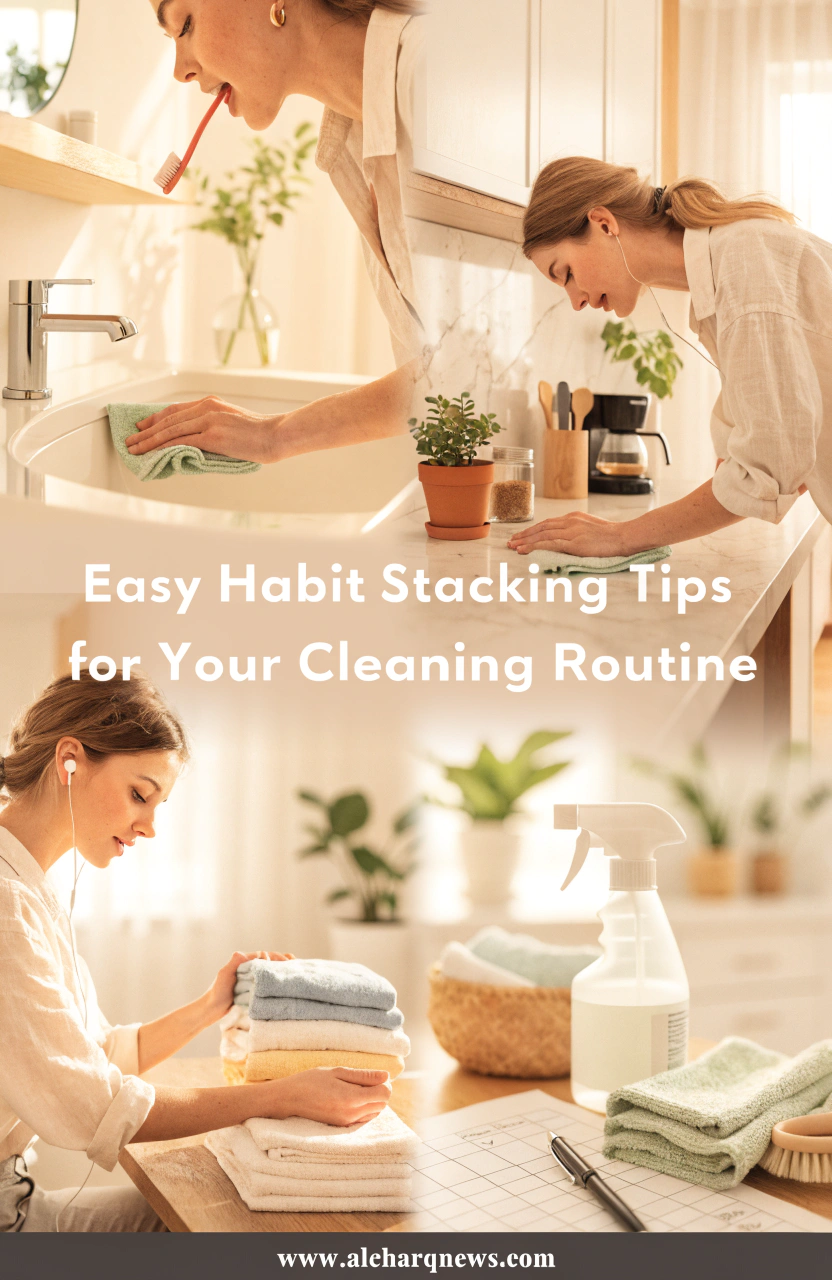
Easy Habit Stacking Tips for Your Cleaning Routine
Do you ever feel like your home cleaning routine is an uphill battle? The never-ending laundry, the dusty surfaces, the organized chaos that quickly becomes disarray? You’re not alone. Many of us struggle to maintain a consistently tidy home without feeling overwhelmed. But what if you could make cleaning feel less like a chore and more like an automatic part of your day? That’s where habit stacking comes in. By linking new, small cleaning tasks to habits you already do, you can build a more efficient and less stressful approach to household maintenance, leading to a consistently cleaner and more organized living space.
This article will guide you through simple, practical habit stacking strategies that will help you seamlessly integrate essential home organization and cleaning tasks into your daily life. Get ready to transform your cleaning routine from a daunting to-do list into a series of effortless actions.
What Exactly is Habit Stacking for Home Cleaning?
Habit stacking is a powerful strategy where you pair a new habit you want to adopt with an existing habit you already perform consistently. The idea is simple: instead of trying to remember to do a new task, you simply attach it to something you already do without thinking. The formula is: “After I [existing habit], I will [new cleaning habit].”
Think about it. You already brush your teeth, make coffee, or check your phone. These are established habits. By adding a small cleaning task right after one of these, you bypass the need for willpower and decision-making. This method is incredibly effective for building a consistent cleaning routine because it leverages the momentum of your existing daily rhythm. It’s not about doing a massive deep clean every day, but about integrating tiny, manageable acts of home cleaning that collectively make a significant difference to your home’s overall tidiness and organization.
Getting Started: Identifying Your Existing Habits
The first step to successful habit stacking is to identify the habits you already do every single day, without fail. These are your anchors – the reliable actions you can use to launch new cleaning tasks. Grab a pen and paper, or open a note on your phone, and list out your typical daily routine.
- Morning Routine: Waking up, making coffee/tea, brushing teeth, showering, getting dressed, eating breakfast.
- Evening Routine: Cooking dinner, eating dinner, washing dishes, watching TV, getting ready for bed, reading.
- Throughout the Day: Checking email, leaving the house, returning home, taking a break, feeding pets.
Be specific. Instead of “morning routine,” think “after I finish my first cup of coffee.” The more precise you are, the easier it will be to identify the perfect spot to stack your new cleaning habits. Remember, the goal is to make these new tasks feel effortless, a natural extension of what you already do.
Practical Habit Stacking Ideas for Your Cleaning Routine
Let’s get into some actionable examples. Remember, you don’t need to implement all of these at once. Pick one or two to start and build from there. These small acts of home cleaning and decluttering will significantly improve your household maintenance over time.
Morning Stacks for a Fresh Start
- After I make my coffee, I will wipe down the kitchen counter. This keeps crumbs and spills from building up.
- After I brush my teeth, I will quickly wipe down the bathroom sink. A quick swipe prevents toothpaste residue from hardening.
- After I get dressed, I will make my bed. A made bed instantly makes your bedroom look more organized.
- After I finish breakfast, I will put my dishes directly into the dishwasher. Prevents a pile-up in the sink.
Evening Stacks for a Calm Close
- After I finish dinner, I will load the dishwasher and wipe down the stovetop. Waking up to a clean kitchen is a small luxury.
- Before I sit down to watch TV, I will do a 5-minute tidy in the living room. Put away blankets, remotes, and magazines. This is a great mini-decluttering session.
- After I take my shower, I will quickly squeegee the shower walls. This prevents soap scum and mildew build-up, reducing the need for deep cleaning later.
- Before I go to bed, I will do a quick sweep of the main floor. Pick up any stray items and return them to their designated home organization spot.
Throughout the Day Stacks for Continuous Maintenance
- After I bring in the mail, I will immediately sort it and recycle junk mail. This avoids paper clutter on your entryway table.
- After I take off my shoes, I will put them directly into the shoe rack. A simple storage solution that keeps your entryway tidy.
- While I’m waiting for the microwave/kettle, I will wipe down the microwave door or kitchen backsplash. Utilize those small pockets of downtime.
- After I change into my workout clothes, I will put my dirty clothes directly into the laundry hamper. No more clothes piles on the floor.
Room-by-Room Habit Stacking Examples
Here’s how habit stacking can look in different areas of your home:
- Kitchen: After every meal, wipe down the table and counters. Before you leave the kitchen, ensure the sink is empty.
- Bathroom: After showering, hang up your towel neatly. After using the toilet, give the seat a quick wipe.
- Bedroom: After getting out of bed, make it. Before you leave for the day, put away any clothes that aren’t in the hamper.
- Living Room: Before sitting down to relax, put away any items that don’t belong (books, remotes, cups).
- Entryway: After walking in the door, put keys on their hook and hang up your coat.
These small, consistent actions contribute significantly to ongoing household maintenance and prevent large messes from accumulating.
Common Mistakes to Avoid When Habit Stacking
While habit stacking is simple, it’s easy to fall into traps that hinder your progress. Be mindful of these common pitfalls:
- Stacking Too Many Habits at Once: Don’t try to implement 10 new cleaning habits on day one. Start with just one or two that feel easy and build momentum. Overwhelm is the enemy of consistency.
- Making the New Habit Too Big: Your stacked habit should be quick and easy. Instead of “After I brush my teeth, I will deep clean the bathroom,” try “After I brush my teeth, I will quickly wipe the sink.” Keep it small, achievable, and under 2-5 minutes.
- Not Being Specific Enough: “After I wake up, I will clean” is too vague. “After I finish my first cup of coffee, I will wipe down the kitchen counter” is much clearer and easier to act on.
- Forgetting to Prepare Your Environment: If your cleaning supplies aren’t readily available, you’re less likely to follow through. Keep a small caddy of cleaning products under the bathroom sink and kitchen sink.
- Not Being Patient with Yourself: You’ll miss a day or two, and that’s okay! Don’t let one missed stack derail your entire effort. Just get back on track the next day. Consistency over perfection is key for a sustainable cleaning routine.
Making it Stick: Tips for Long-Term Success
Building new habits takes time and consistency. Here’s how to ensure your habit stacking efforts lead to lasting improvements in your home cleaning and organization:
- Start Small, Then Scale Up: Master one or two stacks before adding more. Once a habit feels automatic, you can expand it or add another one. For instance, once wiping the sink is automatic, you might add “and wipe the mirror” to that stack.
- Prepare Your Environment: This cannot be stressed enough for *home cleaning*. Keep your cleaning supplies where you’ll use them. Store a small handheld vacuum in the living room, disinfectant wipes in the bathroom, and glass cleaner near mirrors. This reduces friction and makes follow-through easier.
- Use Visual Cues: Sometimes a sticky note or a small checklist can help initially. Place it near your existing habit trigger (e.g., on the coffee maker, next to your toothbrush).
- Track Your Progress (Optional but Helpful): A simple calendar where you mark off each day you successfully complete your stacked habit can be motivating. Seeing your streak grow encourages continued effort.
- Be Kind to Yourself: Life happens. You’ll have off days. Don’t beat yourself up if you miss a stacked habit. Just acknowledge it and commit to doing it next time. The goal is progress, not perfection.
- Review and Adjust: Every few weeks, review your stacked habits. Are they working for you? Do any feel too difficult? Adjust as needed. Maybe a different existing habit would be a better trigger, or the new cleaning task needs to be even smaller.
By consistently applying these techniques, you’ll find that your home organization improves naturally, your decluttering efforts become less overwhelming, and your overall household maintenance becomes a manageable, integrated part of your day.
FAQ Section
Q1: What if I forget my stacked habit sometimes?
A1: It’s completely normal to forget occasionally, especially in the beginning. Don’t get discouraged! The key is to simply get back on track the next time your existing habit occurs. Consistency over time is more important than perfect adherence every single day.
Q2: How long does it take for a stacked cleaning habit to become automatic?
A2: The time frame varies for everyone, but generally, it can take anywhere from 18 to 254 days for a new habit to become automatic. Most people find that after about 2-3 months of consistent practice, the stacked cleaning routine starts to feel natural and almost effortless.
Q3: Can I stack multiple cleaning habits at once?
A3: It’s best to start with one or two new habits until they feel automatic. Trying to stack too many at once can lead to overwhelm and make it harder for any of them to stick. Once you’ve mastered a couple, you can gradually add more.
Q4: What if my existing habit isn’t daily? Can I still use habit stacking?
A4: Yes! While daily habits are ideal for quick results, you can certainly stack habits onto less frequent routines. For example, “After I do laundry, I will wipe down the washing machine.” Or “After I pay bills, I will tidy my desk.” Just ensure the existing habit is consistent enough to build the new one.
Q5: How does habit stacking help with decluttering?
A5: Habit stacking helps with decluttering by integrating small, consistent actions that prevent clutter from accumulating. For example, “After I walk in the door, I will put my keys on the hook and sort my mail.” Or “Before I go to bed, I will return 5 items to their proper home.” These tiny steps prevent piles from forming, making larger decluttering tasks less frequent and daunting.
Conclusion
Transforming your home cleaning routine doesn’t require a complete overhaul or hours of dedicated time each day. It’s about making small, smart changes that add up over time. Habit stacking offers a simple yet powerful framework to integrate cleaning and home organization into your life, making it feel less like a chore and more like an automatic part of your day.
By identifying your existing habits and intentionally linking small, manageable cleaning tasks to them, you can build a consistent system for household maintenance. Start with just one or two stacks today, be patient with yourself, and watch as your home becomes consistently tidier and your cleaning routine becomes significantly