BMW X3 vs X5: Which SUV Is Right for You in 2026?
Choosing between two BMW SUVs can be surprisingly difficult. You may like the more compact feel of the X3, while the larger X5 catches your attention with its extra space and upscale character. Both deliver the premium experience you expect from BMW, but they serve different needs.
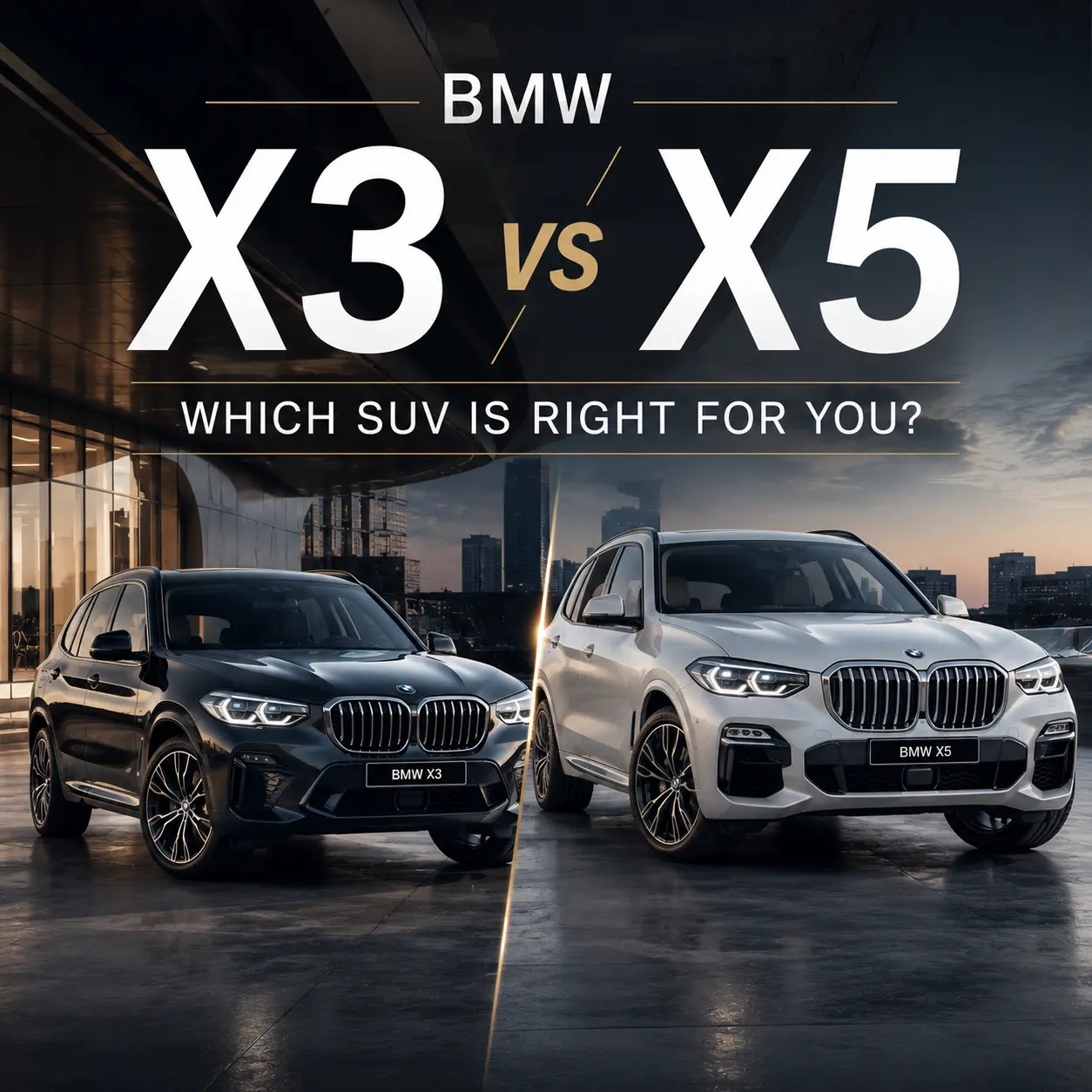
So, when comparing the BMW X3 vs X5, which one should you buy? The answer depends on your budget, family size, driving habits, and the features you value most. Here’s how the two SUVs compare.
BMW X3 vs X5: What’s the Difference?
The easiest way to understand these two SUVs is to look at their intended roles.
The BMW X3 is the more compact and versatile option. It’s easier to maneuver around town, generally costs less, and provides enough space for most couples and smaller families.
The BMW X5 moves further into luxury-SUV territory. Its larger dimensions give you more passenger and cargo room, while its available powertrains provide strong performance.
In simple terms:
- X3: Better for value, agility, and everyday driving.
- X5: Better for space, luxury, comfort, and available performance.
BMW X3 vs X5: Price and Value
Price is one of the first things you should consider. The X3 typically has a lower starting price than the X5, making it easier to enter BMW’s SUV lineup without stretching your budget as far.
The X5 costs more, but you’re paying for a larger vehicle, additional space, greater refinement, and access to more premium equipment and powertrain choices.
Your final price can change considerably once you add options and packages.
Before choosing, compare:
- Starting MSRP
- Trim level
- xDrive availability
- Optional technology packages
- Wheel and interior upgrades
- Financing costs
- Insurance expenses
If you don’t need the additional size of the X5, the X3 can give you better overall value. However, if you’ll regularly use the extra space and luxury features, the X5 can make the higher price easier to justify.
BMW X3 vs X5: Size and Interior Space
Size is one of the clearest differences in the BMW X3 vs X5 comparison.
The X3’s smaller footprint makes it easier to navigate through crowded streets and parking garages. You still get a comfortable cabin and useful cargo space, but it doesn’t feel as large behind the wheel.
The X5 gives you a more spacious environment. Its larger body provides additional room for passengers and luggage, which can be valuable if you regularly travel with your family.
Which Is Better for Cargo?
If you frequently carry strollers, suitcases, sports equipment, or bulky shopping loads, the X5’s additional capacity can be useful.
For everyday errands and normal commuting, however, the X3 offers plenty of practicality for many drivers.
BMW X3 vs X5: Performance and Driving Experience
BMW has built its reputation around driving dynamics, and both SUVs continue that philosophy.
The X3 feels more agile because of its smaller dimensions. You can place it confidently on narrow roads, maneuver through traffic, and enjoy a more responsive character.
The X5 feels different. Its larger body gives it a more planted and substantial character, especially on highways. Depending on the configuration, you can also get powerful engines that make the X5 surprisingly quick for a luxury SUV.
BMW X3 Performance
You should consider the X3 if you want:
- Responsive handling
- Strong acceleration
- Easier maneuverability
- A sporty driving experience
- Available all-wheel drive
BMW X5 Performance
The X5 is attractive if you prioritize:
- Strong available power
- Highway stability
- Comfortable long-distance driving
- Greater towing capability in applicable configurations
- A more substantial driving experience
If you enjoy taking winding roads, the X3’s agility may appeal to you more. If your driving involves long highway journeys, the X5’s refinement becomes a major advantage.
BMW X3 vs X5: Fuel Economy and Electrified Options
Fuel economy depends heavily on the specific engine, drivetrain, wheels, and driving conditions you choose.
Because the X3 is smaller and lighter, it generally has an efficiency advantage over comparable X5 configurations.
The X5 can still make sense if you’re interested in an electrified powertrain available for your market. A plug-in hybrid configuration can potentially reduce gasoline use during shorter daily trips, provided you have convenient access to charging.
When comparing efficiency, don’t look only at the official number. Think about your actual routine.
Ask yourself:
- How many miles do you drive each week?
- Do you make mostly short or long trips?
- Can you charge at home?
- How often do you travel long distances?
- Do you regularly carry heavy loads?
Your answers can make one SUV much more suitable than the other.
BMW X3 vs X5: Interior and Technology
Inside both SUVs, you’ll find a modern BMW environment with digital displays, connectivity, premium materials, and available driver-assistance features.
The X3 gives you a contemporary cabin without requiring you to step into the larger X5. Its interior works particularly well if you want a premium environment without excessive size.
The X5 takes the luxury experience further. The larger cabin, available upscale materials, and additional comfort features make it especially attractive for long journeys.
If you spend hours commuting or regularly transport passengers, you may appreciate the X5’s more spacious atmosphere.
BMW X3 vs X5: Which Is Better for Families?
For a small family, the X3 can be an excellent choice. Its combination of manageable dimensions, cargo flexibility, and comfortable seating makes it easy to use every day.
The X5 becomes more attractive when your family needs additional room. The larger cabin and cargo area can make road trips and daily family duties easier.
Choose the X3 if:
- You have a smaller family.
- You mostly drive around town.
- You want easier parking.
- You don’t regularly carry large amounts of luggage.
- You want to keep your purchase budget lower.
Choose the X5 if:
- You frequently travel with several passengers.
- You need more cargo space.
- You take regular road trips.
- You prioritize rear-seat comfort.
- You’re willing to pay more for additional luxury.
BMW X3 vs X5: Maintenance and Ownership Costs
Buying the SUV is only the beginning. You should also consider what it will cost to keep your BMW on the road.
The X3’s lower purchase price can make it easier to manage financially, while its smaller size may also help with certain running expenses. The X5, meanwhile, can cost more to insure and maintain depending on its engine, trim, wheels, and equipment.
Don’t forget to budget for:
- Scheduled maintenance
- Tires
- Brake components
- Insurance
- Fuel or charging
- Repairs outside warranty
- Depreciation
A lower monthly payment doesn’t automatically mean a cheaper vehicle. Compare the total cost of ownership before making your decision.
BMW X3 vs X5: Quick Comparison
| Feature | BMW X3 | BMW X5 |
|---|---|---|
| Size | Smaller | Larger |
| Price | Lower | Higher |
| Interior Space | Very good | More spacious |
| Cargo Capacity | Good | Greater |
| Handling | More agile | More planted |
| Comfort | Excellent | More luxurious |
| Efficiency | Generally better | Generally lower |
| City Driving | Excellent | Good |
| Family Use | Best for smaller families | Better for larger needs |
| Long Trips | Very good | Excellent |
BMW X3 vs X5: Which One Should You Buy?
The answer comes down to how you intend to use your SUV.
Choose the BMW X3 if you want a vehicle that’s easier to maneuver, less expensive to purchase, and sporty enough to keep daily driving interesting. It’s an especially strong choice if you live in a city or have a smaller family.
Choose the BMW X5 if you need additional passenger and cargo space, want a more luxurious environment, or spend significant time traveling on highways.
Before buying, take both SUVs for a test drive. Sit in the back seats, load the cargo area, test the technology, and pay attention to how each vehicle feels on roads you regularly drive.
FAQ: BMW X3 vs X5
Is the BMW X3 or X5 better?
Neither is automatically better. The X3 is better suited to buyers who prioritize value, agility, and easier everyday driving. The X5 is a stronger choice when space, luxury, and performance matter more.
Is the BMW X5 worth the extra money over the X3?
It can be if you’ll actually use its additional space, comfort, premium features, and available performance. If you don’t need those advantages, the X3 may offer better value.
Which is bigger, the BMW X3 or X5?
The BMW X5 is larger. Its increased dimensions provide more room for passengers and cargo, while the X3 is easier to maneuver in tighter environments.
Which is better for families, BMW X3 or X5?
For smaller families, the X3 can provide more than enough space. Larger families or those who frequently travel with substantial luggage may benefit more from the X5.
Which gets better fuel economy, X3 or X5?
The X3 generally has an efficiency advantage because it is smaller and lighter, although exact fuel economy depends on the engine, drivetrain, and configuration.
BMW X3 vs X5: Which should you buy in 2026?
If you want a balanced luxury SUV at a lower price, choose the X3. If you need more space and want a higher level of luxury and available performance, the X5 is likely the better fit.
Conclusion: BMW X3 vs X5 Comes Down to Your Priorities
The BMW X3 vs X5 decision isn’t really about finding a universal winner. It’s about finding the SUV that fits your life.
The X3 gives you an appealing combination of agility, practicality, efficiency, and value. The X5 rewards you with additional space, comfort, luxury, and powerful available configurations.
Think about your daily routine before you decide. Do you need more room, or would you rather have a smaller SUV that’s easier to live with?
Once you’ve narrowed down your choice, compare the exact trims available in your market and schedule a test drive. Would you choose the BMW X3 or X5? Share your pick and tell us which feature matters most to you—price, performance, luxury, fuel economy, or family space.